Discover the best bird cage ladder toys and swings for happy, active birds. Learn how to install, clean, and build DIY ladders that keep your feathered friends fit and curious.
🪶 Introduction: Why Play Matters Inside Every Bird Cage
Have you ever noticed how your bird’s eyes light up when it hops from perch to perch or tugs at a dangling toy? That tiny spark of curiosity isn’t just adorable — it’s essential to your feathered friend’s mental and physical well-being. In the world of pet care, one of the most overlooked essentials is bird cage ladder toys — simple yet powerful tools that stimulate natural instincts, prevent boredom, and keep your bird fit and happy.
In the wild, birds spend most of their day flying, climbing branches, balancing on twigs, and foraging. Every leap, swing, or stretch keeps their bodies agile and their minds sharp. But in captivity, limited space and repetitive routines can lead to frustration, feather plucking, or even depression. That’s where bird cage ladder toys step in — transforming a static cage into a miniature adventure park.
These toys aren’t just decorative; they serve as ladders to confidence, bridges to curiosity, and gyms for daily exercise. From colorful wooden ladders and rope bridges to hanging swings and interactive bells, the variety of bird cage ladder toys available today caters to every size, species, and personality. Whether you own a playful budgie or a majestic macaw, integrating the right climbing and swinging accessories makes your cage a place of joy rather than confinement.
As we explore the top bird cage ladder toys and swings, you’ll discover how to choose, install, and maintain them — and why every cage truly needs a fun hanging spot. By the end of this guide, you’ll not only understand the importance of play but also learn how to nurture your bird’s instincts safely and smartly through the perfect combination of ladders and swings.
💡 Pro Tip: Even five minutes of daily interaction with your bird’s ladder or swing can dramatically improve its mood, balance, and bond with you.
🌿 Why Ladders & Swings Matter for Birds
Imagine a life without movement — no trees to climb, no wind to glide with, and no play to spark curiosity. For birds, that would be like living in a world without joy. Inside a cage, the absence of natural activity can make them restless or even sad. That’s exactly why bird cage ladder toys are not a luxury; they’re a necessity. They bridge the gap between instinct and environment, giving your bird a taste of the freedom it craves.
Birds have an innate desire to climb, balance, and explore. Their feet, muscles, and beaks are designed for constant engagement. In the wild, they move from branch to branch, flap through leaves, and swing with the breeze. When we introduce bird cage ladder toys, we mimic this rhythm of nature — allowing them to exercise, stretch, and stay active. This activity supports their cardiovascular health, maintains muscle tone, and reduces behavioral issues caused by boredom or confinement.
Besides physical benefits, these toys nurture emotional wellness. Birds are intelligent and social creatures. Without stimulation, they may pluck their feathers or scream excessively — signs of stress or loneliness. But when surrounded by interactive bird cage ladder toys, they express curiosity and confidence. Climbing a rope ladder or swinging gently on a perch gives them a sense of achievement and calm.
Think of ladders and swings as mindfulness tools for birds — helping them stay present, curious, and joyful. The sound of a jingling bell, the feel of textured wood under their claws, or the sway of a swing in rhythm with their chirps can transform their cage into a living playground.
💡 Pro Tip: Rotate your bird cage ladder toys every two weeks to keep things fresh. Birds love novelty, and rearranging toys prevents boredom while stimulating mental agility.
🪴 Choosing the Right Bird Cage Ladder Toys
Selecting the perfect bird cage ladder toys isn’t just about picking the most colorful item on the shelf — it’s about understanding your bird’s natural instincts, body size, and play behavior. Each species interacts with toys differently. What delights a parakeet might intimidate a cockatiel, and what entertains a finch could bore a parrot. The right ladder or swing can keep your bird physically active, mentally sharp, and emotionally satisfied — but the wrong one can lead to fear, injury, or neglect.
🪶 Step 1: Match the Toy Size to the Bird Species
The golden rule for choosing bird cage ladder toys is proportionality.
- Small birds (budgies, finches, canaries): Choose lightweight ladders made of soft wood or natural vines. The rungs should be thin enough for their tiny claws to grip comfortably.
- Medium birds (cockatiels, conures, lovebirds): Go for slightly thicker rope or wood ladders with sturdy swings that allow mild rocking motion.
- Large parrots and macaws: Pick heavy-duty hardwood or stainless steel toys with reinforced connectors. They love climbing and chewing, so durability is key.
Each rung, swing, or perch should support the bird’s natural gripping pattern. Properly fitted bird cage ladder toys help maintain foot health and prevent arthritis or overgrown nails.
🌈 Step 2: Prioritize Natural Materials
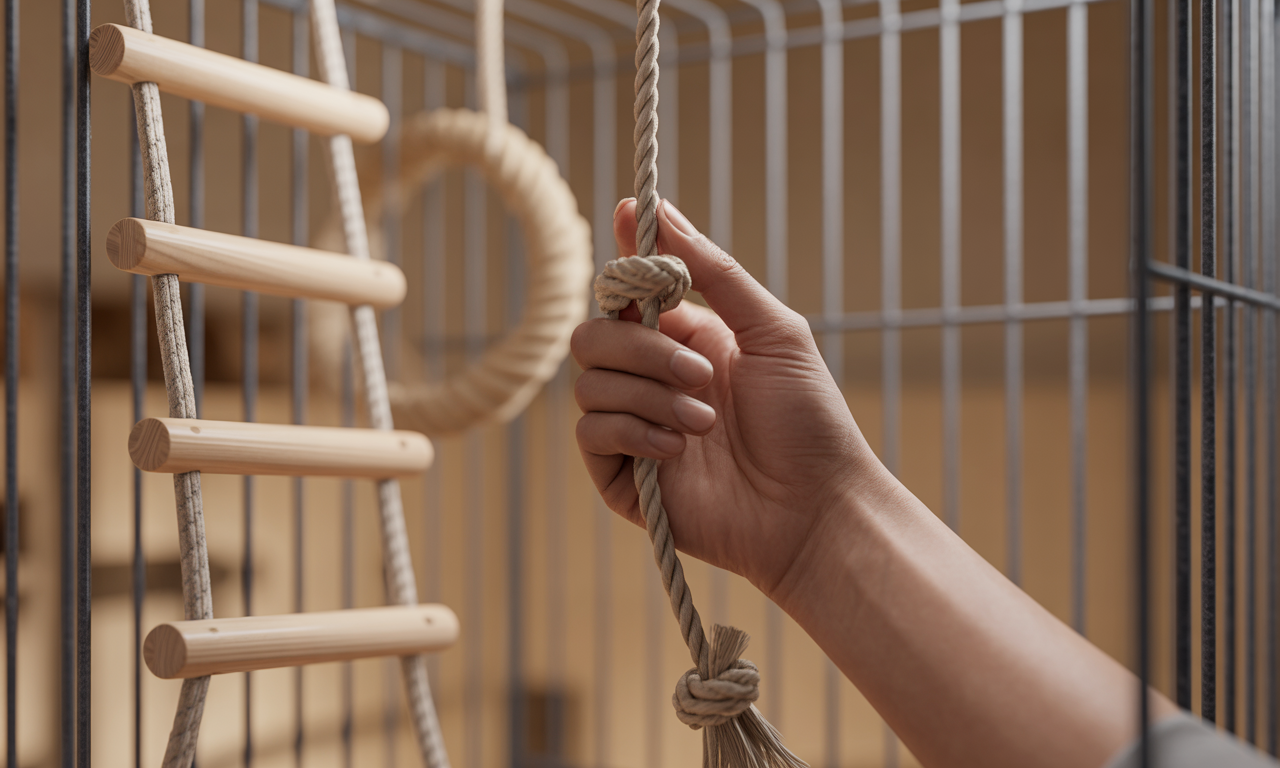
Birds use their beaks to explore, so anything inside the cage will eventually be chewed, gnawed, or tasted. That’s why natural, non-toxic materials are essential.
Look for:
- Untreated wood (pine, applewood, or manzanita)
- Natural cotton or sisal ropes
- Stainless steel clips (avoid zinc or lead-based metals)
- Vegetable-based dyes for color-safe fun
Avoid plastic or painted ladders, which can chip or cause toxicity when ingested. A good rule of thumb: if it smells synthetic or feels too smooth, it probably isn’t safe for your bird.
🎠 Step 3: Choose Toys that Encourage Movement
The best bird cage ladder toys do more than hang prettily — they invite climbing, swinging, balancing, and exploring. Choose designs that challenge agility and coordination:
- Rope ladders: Ideal for active birds who love to climb and twist.
- Wooden ladders: Great for foot exercise and grip strength.
- Swings with bells: Offer sensory stimulation and rhythmic motion.
- Hanging toys with mirrors or beads: Engage curiosity and reduce loneliness.
💡 Pro Tip: Mix up textures and levels — a rope ladder leading to a swing creates a mini obstacle course that mimics wild foraging adventures.
🧠 Step 4: Check Safety and Stability
Before installing any bird cage ladder toys, inspect every clip, knot, and string. Loose threads or sharp edges can trap tiny toes or feathers. Always secure toys firmly to the cage ceiling or bars. Stability matters as much as excitement — a shaky or poorly balanced toy can cause anxiety or accidents.
🌞 Step 5: Think of Mental Enrichment
Beyond physical exercise, toys should offer brain stimulation. Birds love problem-solving challenges. Try attaching small treats or foraging cups near ladders or swings to make playtime rewarding. This approach transforms simple bird cage ladder toys into interactive puzzles that build confidence and reduce boredom.
💬 Pro Tip: Observe your bird’s play habits closely for the first week after adding a new toy. If it avoids the toy, try repositioning it — sometimes a new angle makes all the difference.
Top 7 Bird Cage Ladder Toys & Swings Reviewed
1. Natural-Wood Climbing Ladder Toy
This ladder features untreated wood rungs and cotton rope connectors—designed for gentle climbing and soft chewing. Many bird owners report how their pet uses it to hop between perches and engage more actively in the cage. It brings the ideal blend of exercise and exploration, making it one of the most effective bird cage ladder toys.
Pros: Safe material, encourages foot health & movement.
Cons: May require frequent replacement if your bird is a heavy chewer.
2. Rope Ladder & Hanging Swing Combo
If you want dual function, this ladder-swing combination stands out. The rope structure allows climbing while the swing adds gentle motion. In effect, it turns normal perch time into interactive play. It’s a strong contender among bird cage ladder toys, especially for birds that like to switch between climbing and swinging.
Pros: Multifunctional, space-efficient.
Cons: Ensure installation is secure to avoid drop hazards.
3. Acrylic & Bead Hanging Ladder Toy
This version blends transparent acrylic with colorful wooden beads, giving visual stimulation along with climbing challenge. It’s a standout in the bird cage ladder toys category because it also supports sensory enrichment—not just movement.
Pros: Quiet, bright, good for smaller species.
Cons: Not as rugged—larger birds may damage it faster.
4. Heavy-Duty Parrot Ladder with Swing Attachment
For larger birds (macaws, Amazons), this ladder model incorporates heavy hardwood and a robust swing hook. It addresses the demands of serious chewers and climbers, positioning itself among the premium tier of bird cage ladder toys.
Pros: Durable, built for big birds.
Cons: Larger footprint—may overwhelm smaller cages.
5. Multi-Step Platform Ladder with Hanging Toys
In this design, several ladder steps lead to a small platform, with hanging bells and chew-blocks underneath. It’s one of the more creative offerings within bird cage ladder toys, turning climbing into a full little playground.
Pros: High engagement, multiple activity modes (climb, rest, chew).
Cons: More expensive and may require careful cage layout to fit.
6. Eco-Friendly Bamboo Ladder with Natural Swing
An eco-conscious design, this ladder uses bamboo, coconut shell swing, and untreated rope. It appeals to bird parents looking for sustainable versions of bird cage ladder toys.
Pros: Environmentally friendly, natural aesthetics.
Cons: Lighter material—less suited for very heavy birds.
7. DIY-Friendly Ladder Kit with Add-On Hanging Toy Elements
If you enjoy customizing, this kit includes parts for you to assemble your own ladder and matching hanging toys. It’s ideal as a creative option under the bird cage ladder toys umbrella, giving you control over materials and design tailored to your bird’s preferences.
Pros: Customization, cost-effective.
Cons: Requires DIY work (cutting, assembly, securing parts).
How to Pick the Best One for Your Bird
- Species & Size: Smaller birds do well with lightweight ladders; larger birds need heavy-duty builds.
- Cage Space: Ensure the ladder plus swing doesn’t block flight zone or bowls.
- Material Quality: Natural wood or bamboo is preferable; avoid glossy paint or unknown plastics.
- Installation Safety: Secure hooks, ensure no sharp edges, and check daily for wear.
- Rotation & Maintenance: Even the best bird cage ladder toys lose novelty—plan to rotate or refresh every 2-3 weeks.
🧩 Installation & Maintenance of Bird Cage Ladder Toys
Once you’ve chosen the perfect bird cage ladder toys, the next step is ensuring they’re installed safely and maintained properly. The installation process might seem simple at first glance, but small mistakes—like improper hook placement or unstable hanging—can lead to accidents, fear, or even injury. Let’s explore the best ways to position, secure, and maintain your bird cage ladder toys so they become a trusted part of your bird’s daily adventure.
🪜 Step 1: Choose the Right Placement
Placement is everything. Birds naturally love to climb upwards, so ladders should connect different vertical levels inside the cage. Ideally, one end should start near a perch or food bowl, leading upward to a swing or rest area.
Do:
- Position bird cage ladder toys diagonally for easy climbing and balance.
- Keep enough headspace above each rung to avoid bumping into cage bars.
- Ensure toys are not blocking access to feeders or doors.
Don’t:
- Mount ladders directly under droppings zones or too close to the roof.
- Hang swings near sharp corners or metal hooks.
💡 Pro Tip: Observe your bird for a day or two. If it avoids a certain ladder angle or struggles to climb, adjust the placement slightly. Comfort always comes first.
🧰 Step 2: Secure All Hooks & Connectors
Every ladder, swing, or hanging toy must be fixed tightly but flexibly. Metal clips or carabiners should be stainless steel to prevent rust and poisoning. Avoid twist ties or wires, which can unravel and snag feathers or feet.
Pro Tip: Gently tug each connection after installation. If it wobbles or squeaks, tighten or reposition it. Safety is non-negotiable when setting up bird cage ladder toys.
🧼 Step 3: Cleaning & Hygiene Routine
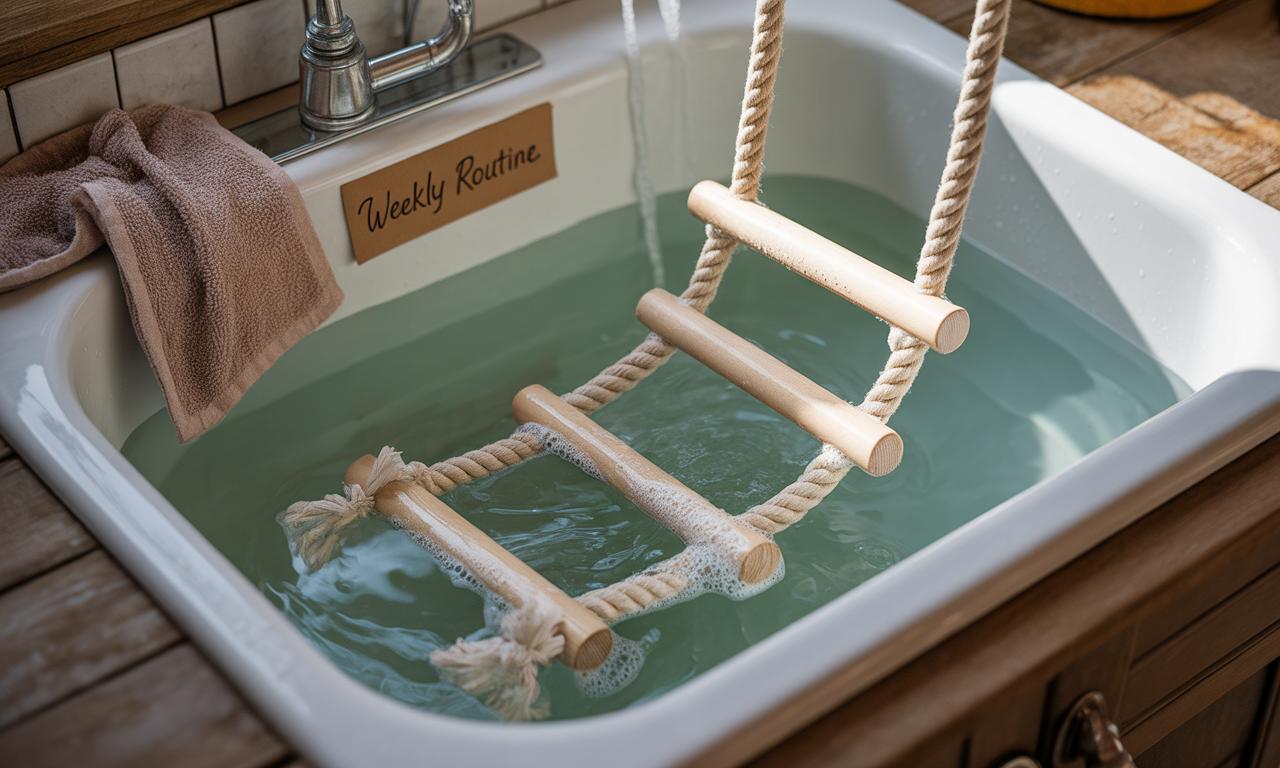
Cleanliness is essential to your bird’s health. Dust, droppings, and food residues quickly accumulate on bird cage ladder toys, creating bacteria or mold risks. Follow a simple cleaning ritual once or twice a week:
Cleaning Steps:
- Remove all toys before spraying the cage.
- Wash ladders and swings in warm water with mild vinegar or bird-safe disinfectant.
- Rinse thoroughly — no soap residue.
- Dry completely under sunlight before reattaching.
Pro Tip: For rope or cotton ladders, freeze them overnight once a month — this kills mites and bacteria without chemicals.
🔄 Step 4: Rotate Toys Regularly
Even the most exciting bird cage ladder toys lose appeal after constant exposure. Birds are highly intelligent; they crave novelty and challenge. To keep them engaged, rotate ladders and swings every 2–3 weeks.
- Move one ladder higher or sideways.
- Replace one swing with a new hanging toy.
- Add a treat cup or bell near an old toy for a fresh twist.
This small change keeps your bird alert, curious, and happy — like living in a brand-new playground every month.
🪶 Step 5: Inspect for Wear & Damage
Birds chew, tug, and climb relentlessly. Over time, ropes fray, clips loosen, and wooden rungs splinter. Regular inspections prevent accidents before they happen.
Checklist:
- Look for sharp edges or rust spots.
- Check ropes for unraveling or thinning.
- Replace damaged parts immediately.
💡 Pro Tip: Keep a backup set of bird cage ladder toys handy so replacements are quick and stress-free.
🧵 DIY Bird Ladder & Swing Projects (Creative Bird Parents’ Corner)
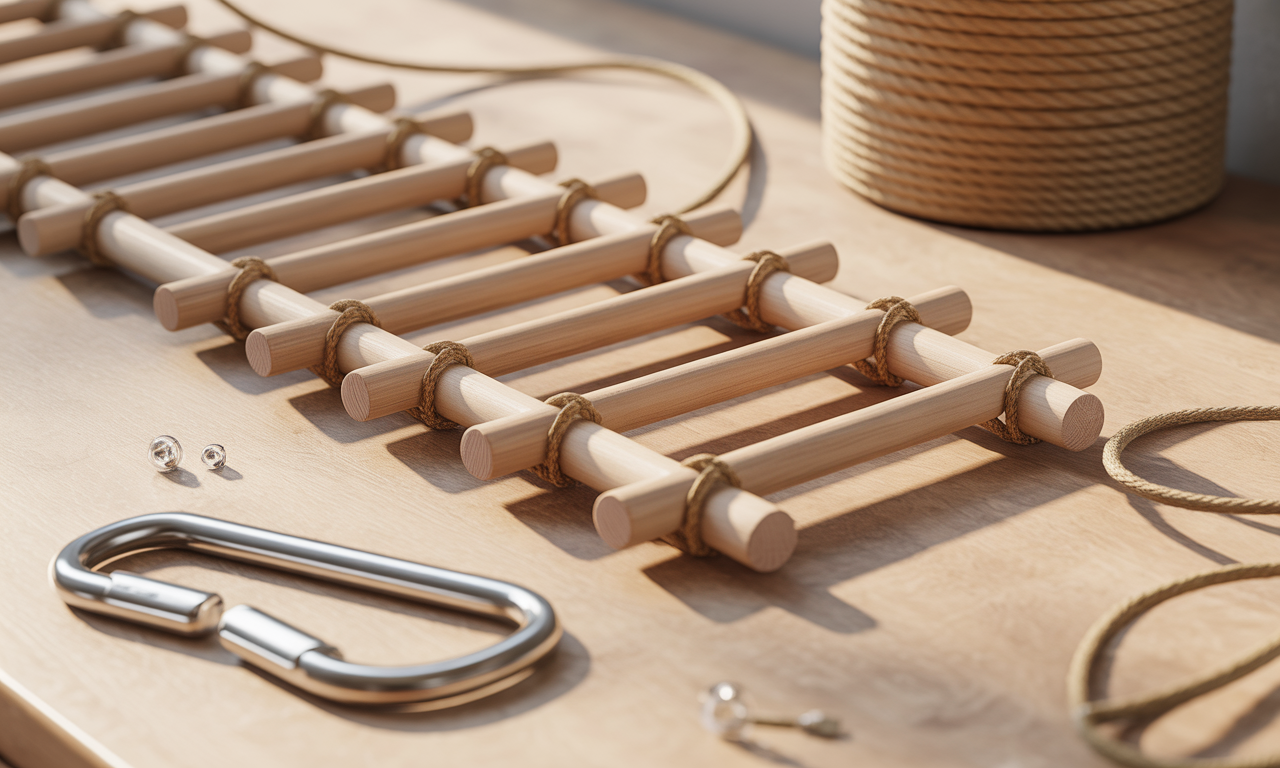
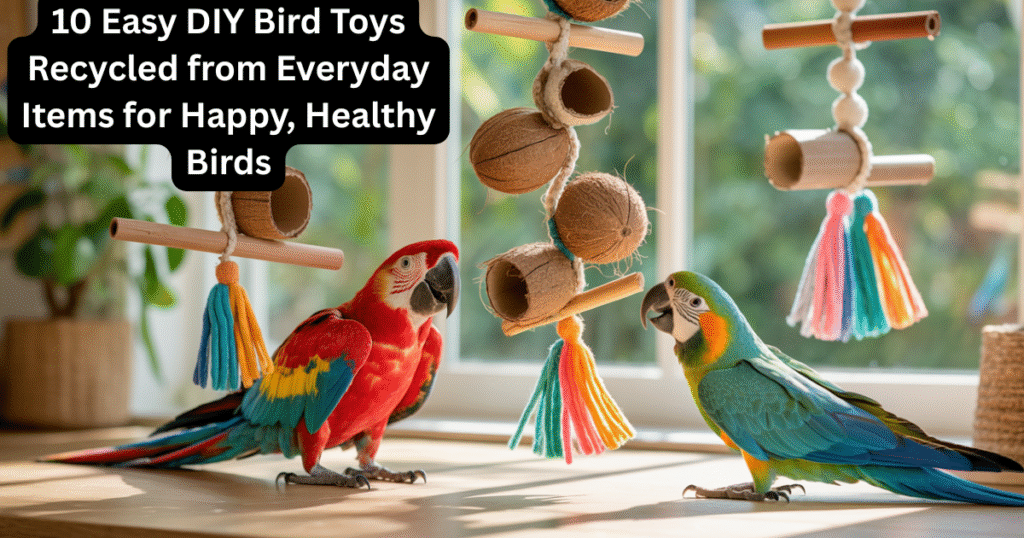
Why buy every toy when you can make your own? DIY bird cage ladder toys are affordable, customizable, and deeply satisfying to create. Plus, they let you bond creatively with your pet while ensuring safety and sustainability.
🌿 Option 1: The Natural Twig Ladder
What You Need:
- Untreated twigs (applewood, neem, or guava)
- Cotton rope or sisal twine
- Stainless steel hooks
Steps:
- Cut twigs into even lengths (4–6 inches for small birds, longer for big ones).
- Drill holes on both ends of each twig.
- Thread twine through holes, knotting securely at each end.
- Hang diagonally or horizontally inside the cage.
This simple creation mimics a forest branch and becomes a durable addition to your collection of bird cage ladder toys.
🎠 Option 2: The Coconut Swing Paradise
What You Need:
- Half a coconut shell
- Drill and natural rope
- Small bell (optional)
Steps:
- Drill two holes opposite each other on the shell’s rim.
- Thread rope through and tie a strong knot.
- Attach the swing near a perch or food bowl.
This eco-friendly design provides shade, exercise, and play all at once. Many parrots love resting or napping on it after playtime.
🪶 Option 3: DIY Foraging Ladder
Turn feeding time into a mini-adventure!
What You Need:
- Wooden ladder base
- Coconut fiber string
- Small foraging cups or paper rolls
Steps:
- Tie cups to various rungs using fiber string.
- Fill each with a few seeds or fruit pieces.
- Watch your bird climb, search, and nibble through joy.
💡 Pro Tip: Use different colors and textures each week to maintain excitement. Homemade bird cage ladder toys like this improve problem-solving skills and reduce boredom.
❓ Frequently Asked Questions (FAQ)
(RankMath Schema-Enabled)
Q1. How often should I replace or rotate bird cage ladder toys?
Ideally, you should rotate bird cage ladder toys every two to three weeks. Birds thrive on novelty, and frequent rearrangements encourage mental agility and prevent boredom. Watch how your bird interacts with each toy — if it loses interest or chews one excessively, it’s time for a new setup. Regular rotation also allows you to inspect every rung, rope, and clip for safety before reinstalling them.
Pro Tip: Keep two or three spare ladders ready. That way, when one set is being cleaned or replaced, your feathered friend never faces an empty cage.
Q2. Are all materials safe for bird cage ladder toys?
No — not all materials are safe. Avoid plastics, painted woods, or metallic parts coated with zinc or lead. Safe bird cage ladder toys are made from untreated hardwoods (like pine, applewood, or bamboo), cotton or sisal rope, and stainless-steel connectors. Always check that colors come from vegetable-based dyes, not synthetic paints. If a toy smells chemical or feels sticky, it’s best avoided.
For safety confirmation, you can refer to expert sources like:
- American Federation of Aviculture
- BirdLife International
- PetMD’s Bird Care Guides
Q3. My bird ignores new toys. What should I do?
It’s common for birds to feel unsure about new additions. Introduce bird cage ladder toys gradually: place them outside the cage for a day or two so your bird can observe without fear. Once curiosity builds, move them inside but keep them near familiar perches or feeding bowls. Positive reinforcement — gentle talk, treats, or mimicry — helps your bird associate the toy with comfort.
Pro Tip: Avoid crowding the cage. Too many new items at once can overwhelm your bird. Add one toy per week and observe the response before introducing another.
Q4. Can I use outdoor branches to make DIY ladders or swings?
Yes — but with care. If you’re crafting homemade bird cage ladder toys, always choose branches from pesticide-free trees such as guava, neem, or applewood. Wash thoroughly, remove bark debris, and bake or sun-dry them to kill bacteria and insects. Never use pine that smells strongly of resin or any wood that’s been varnished or polished.
Q5. Do bird cage ladder toys help with training and bonding?
Absolutely. Climbing and swinging together can build trust between you and your pet. Birds often learn through imitation; if you gently tap or move a ladder rung while talking softly, they’ll soon follow your lead. Over time, playing near bird cage ladder toys becomes a ritual of companionship — strengthening your emotional bond while improving your bird’s coordination.
Q6. How do I clean rope or cotton ladders safely?
Soak them in warm water mixed with mild vinegar (1 part vinegar to 3 parts water). Scrub gently, rinse thoroughly, and dry completely before reinstalling. Alternatively, you can freeze rope bird cage ladder toys overnight once a month to kill mites naturally. Never use detergents or soaps; even tiny residues can harm your bird’s skin and beak.
Q7. What’s the best placement for ladders and swings inside the cage?
Install bird cage ladder toys diagonally, allowing easy access between perches without blocking flight space or feeders. Swings should hang slightly below the main perch, offering space to move freely without hitting the cage roof. If your cage is small, consider rotating ladders and swings weekly rather than cramming too many at once.
🌈 Conclusion: Building a Playground of Joy and Trust
A happy bird isn’t just colorful on the outside — it’s vibrant within. The flutter of wings, the rhythmic sway of a swing, and the confident climb across wooden rungs all tell the same story: your bird feels alive. With the right bird cage ladder toys, you recreate the natural rhythm of the wild inside the comfort of your home.
These toys aren’t just accessories; they are bridges between captivity and freedom. They empower your bird to move, explore, and express curiosity safely. More importantly, they nurture emotional balance. A bird that climbs and swings daily exhibits healthier plumage, sharper reflexes, and calmer behavior.
So next time your bird hops joyfully onto its ladder, know that you’ve done something profoundly kind — you’ve given it a world to conquer, one rung at a time.
💬 Final Tip: Keep observing, keep adjusting, and keep connecting. Every moment you invest in your bird’s environment pays back in chirps, trust, and sparkling feathers.
📘 Glossary (RankMath Schema-Enabled)
Bird Cage Ladder Toys: Accessories made from safe, chewable materials like wood, rope, or bamboo that encourage climbing, swinging, and active play inside bird cages.
Foraging: A natural behavior where birds search for food or hidden treats, promoting curiosity and problem-solving.
Preening: The act of grooming feathers to keep them aligned, clean, and healthy — often enhanced by activity on ladders and swings.
Perch Grip: The texture and diameter of the surface that a bird holds with its feet; essential for joint health.
Sisal Rope: A natural fiber rope used in many bird cage ladder toys for its durability and non-toxic properties.
Draft-Free Zone: A stable, warm area free of cold air currents where birds can safely dry or rest after play.
Enrichment: Activities or objects that mentally stimulate birds and mimic their natural environment — the main purpose behind ladders and swings.
💡Looking for something different? Check out our latest post here: https://birdsheavencare.com/bird-bathing-frequency-tips