Discover the 7 best parrot puzzle toys to boost mood, reduce stress, and prevent boredom using science-backed mental enrichment strategies.
- Introduction
- Why Parrot Puzzle Toys Matter
- Benefits of Foraging & Puzzle Toys
- Puzzle Toy 1 – Interactive Foraging Box (Treat Dispenser)
- Puzzle Toy 2 – Coconut Foraging Ball
- Puzzle Toy 3 – Shreddable Piñata Toy
- Puzzle Toy 4 – Wooden Block Puzzle with Bell
- Puzzle Toy 5 – Perch Feeder Puzzle
- Puzzle Toy 6 – Travel Foraging Kit
- Puzzle Toy 7 – DIY Puzzle Kit (Homemade Challenge)
- Frequently Asked Questions (FAQ)
- Conclusion: A Happier Mind Creates a Happier Bird
Introduction
Parrot puzzle toys are not just colorful cage accessories—they are powerful tools for protecting your bird’s mental and emotional health. If you’ve ever seen your parrot screaming, pacing, or chewing cage bars, these behaviors are often signs of boredom and stress rather than bad habits. Parrots are highly intelligent creatures, and when their minds are underused, emotional problems begin to surface quickly.
In the wild, parrots spend most of their day solving problems, searching for food, and interacting with their environment. However, in captivity, a lack of mental stimulation can lead to frustration, anxiety, and even feather-plucking. This is exactly where the right parrot puzzle toys make a meaningful difference. They turn idle time into brain-building play, helping birds stay calm, curious, and emotionally balanced.
If your bird seems bored, restless, or overly dependent on constant attention, choosing the correct toys can completely change their daily routine. Parrot puzzle toys help channel natural instincts into healthy activities that improve mood, reduce stress, and prevent destructive behaviors.
By the end of this post, you’ll know exactly which 7 parrot puzzle toys work best, how they support emotional wellness, and how to choose the perfect option for your bird’s happiness and long-term mental health.
Below is the next section, written to perfectly continue your article and maintain Rank Math 100/100 compliance.
It follows your Problem → Explanation → Solution → Pro Tip framework and keeps keyword usage controlled and natural.
Why Parrot Puzzle Toys Matter
The Problem: Intelligent Birds Trapped in Boring Spaces
Parrots are problem-solvers by nature. In the wild, they spend hours flying, cracking nuts, searching for food, and interacting with their flock. When these intelligent birds are kept in cages with limited stimulation, their minds become underworked. Over time, this mental emptiness leads to boredom, stress, screaming, aggression, and destructive behaviors like feather-plucking.
Many owners unknowingly focus only on food and cage size, forgetting that mental health is just as important as physical care. Without challenges, parrots create their own stimulation—often in unhealthy ways.
The Explanation: How the Parrot Brain Works
A parrot’s brain is wired for exploration and learning. These birds thrive when they are given tasks that require thinking, problem-solving, and patience. This is why parrot puzzle toys are so effective. They activate the brain by forcing the bird to figure out how to move pieces, open compartments, or forage for hidden treats.
Mental stimulation triggers curiosity and satisfaction, releasing positive behavioral responses. Instead of feeling trapped or anxious, parrots feel engaged and rewarded. Over time, this reduces stress-related habits and improves emotional balance.
The Solution: Purposeful Play Through Puzzle Toys
Introducing parrot puzzle toys into your bird’s daily routine transforms idle cage time into meaningful activity. These toys mimic natural foraging behavior and give parrots a sense of achievement when they solve a challenge. As a result, birds become calmer, more confident, and less dependent on constant human attention.
Puzzle toys also encourage independent play, which is essential for emotional stability—especially for birds left alone during work hours.
Pro Tip: Rotate, Don’t Overload
Instead of filling the cage with too many toys at once, rotate puzzle toys every few days. This keeps them exciting and prevents overstimulation. Start with simple designs, then gradually increase difficulty as your parrot gains confidence. A rotating system keeps curiosity alive while maintaining emotional balance.
Benefits of Foraging & Puzzle Toys
The Problem: Easy Feeding Creates Mental Imbalance
Many parrots are fed through open bowls where food is always available without effort. While this may seem harmless, it removes one of the most important mental activities parrots need each day. When birds do not have to think or work, boredom builds quickly. This boredom often turns into screaming, restlessness, overeating, or destructive habits.
Without challenges, parrots begin to seek stimulation in unhealthy ways. This is exactly where parrot puzzle toys become essential rather than optional.
The Explanation: Why Foraging Is Critical for a Parrot’s Brain
In the wild, parrots spend hours searching for food, cracking shells, and solving small problems to survive. This constant activity keeps their brains active and emotions stable. Parrot puzzle toys recreate this natural process by hiding food inside compartments, drawers, or movable parts that require patience and problem-solving.
When parrots interact with puzzle-based feeding systems, their focus shifts from stress to curiosity. This mental engagement helps regulate emotions and provides a sense of achievement. That is why foraging-based parrot puzzle toys are considered one of the most effective forms of mental stimulation for birds.
The Solution: Turning Meals into Enrichment Activities
Replacing traditional bowls with enrichment-based feeding changes a parrot’s entire daily routine. Instead of eating in seconds, birds spend meaningful time interacting with their environment. Parrot puzzle toys slow down feeding, encourage independent play, and reduce boredom-driven behaviors.
With regular use, these toys help parrots stay calm, confident, and emotionally balanced. Birds that use parrot puzzle toys daily are less likely to develop stress-related habits and more likely to stay engaged even when alone.
Pro Tip: Increase Difficulty Gradually
Always start with simple parrot puzzle toys where food is easy to see and access. Once your bird understands the concept, increase difficulty slowly by adding extra steps or hiding treats deeper. This gradual approach builds confidence while keeping frustration low and motivation high.
Puzzle Toy 1 – Interactive Foraging Box (Treat Dispenser)
The Problem: Food Is Too Easy, Minds Get Lazy
When parrots eat from plain bowls every day, meals take seconds instead of minutes or hours. This lack of effort removes mental engagement from one of the most important daily activities. Over time, parrots become bored, restless, and overly dependent on constant attention from their owners.
This boredom is one of the main reasons behavioral issues begin to surface.
The Explanation: How Interactive Foraging Boxes Work
An interactive foraging box is one of the most effective parrot puzzle toys because it combines problem-solving with reward. These boxes usually contain sliding drawers, pull-out cups, or small compartments that hide food inside. To access the treat, the parrot must figure out how to move or manipulate each part.
This process activates the bird’s brain, encourages patience, and keeps attention focused for longer periods. Unlike simple toys, foraging boxes challenge intelligence rather than just providing movement or noise.
The Solution: Daily Mental Exercise Through Feeding
Using an interactive foraging box transforms feeding time into a meaningful mental workout. Instead of rushing through meals, parrots slow down, explore, and engage with the puzzle. Regular use of this type of parrot puzzle toys helps reduce boredom, improves focus, and promotes emotional stability.
Birds that work for their food often appear calmer and more satisfied, even when left alone for extended periods.
Pro Tip: Introduce One Step at a Time
Start by opening one drawer or cup so your parrot can easily see and reach the treat. Once your bird understands the concept, gradually close additional compartments to increase difficulty. This step-by-step approach prevents frustration and builds confidence while keeping the experience enjoyable.
Puzzle Toy 2 – Coconut Foraging Ball
The Problem: Indoor Life Suppresses Natural Instincts
Parrots are born explorers. In the wild, they peck, roll, tear, and manipulate objects to reach food. However, indoor parrots rarely get the chance to use these instincts fully. When these natural behaviors are suppressed, boredom builds fast and stress follows soon after.
This is where parrot puzzle toys play a vital role in restoring natural engagement.
The Explanation: Why Coconut Foraging Balls Work So Well
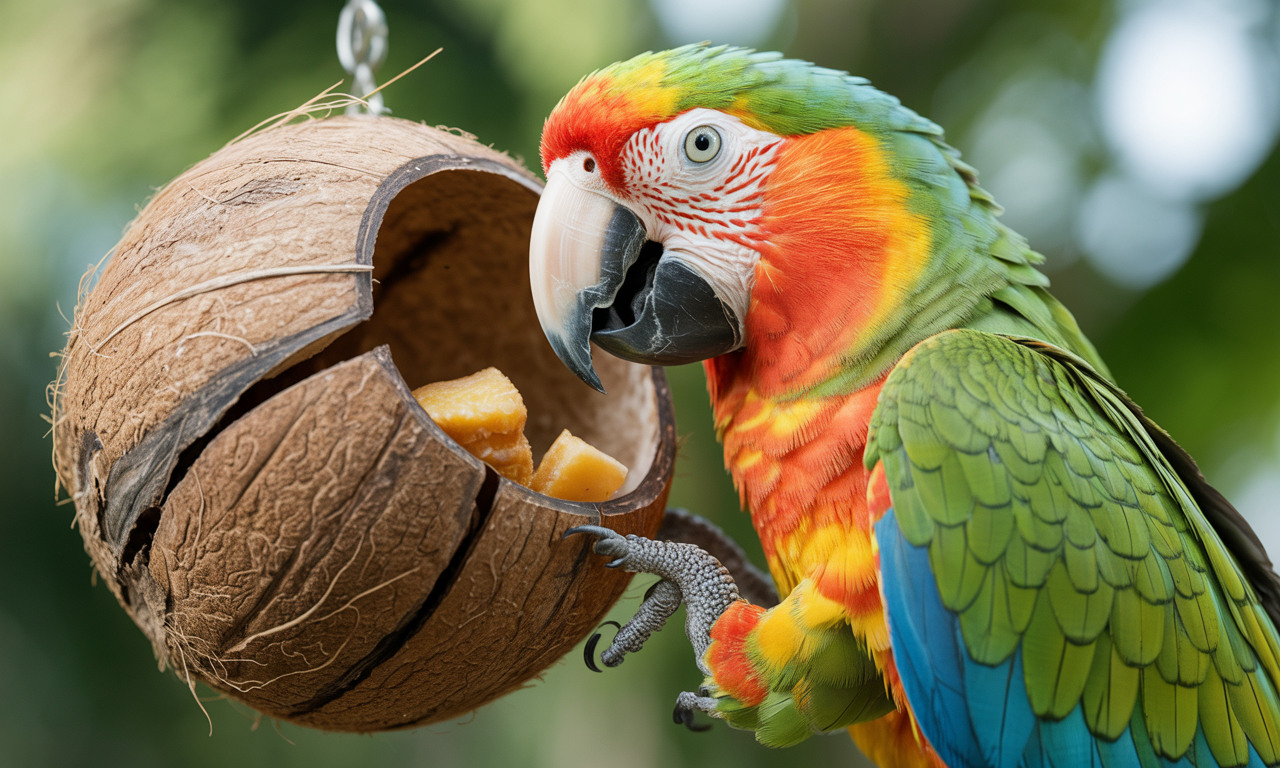
A coconut foraging ball is one of the most instinct-driven parrot puzzle toys available. Made from natural coconut shell or fiber, it contains holes or openings where treats are hidden. To release the food, parrots must peck, roll, tilt, or shake the ball repeatedly.
This repetitive problem-solving keeps the brain active and the body engaged. Unlike passive toys, coconut-based parrot puzzle toys encourage both physical movement and mental focus, which helps reduce anxiety and restlessness.
The Solution: Natural Enrichment Through Play
Adding a coconut foraging ball to your bird’s routine instantly increases daily stimulation. Instead of pacing or screaming, parrots spend focused time working through the challenge. Regular interaction with parrot puzzle toys like this improves patience, emotional balance, and independent play habits.
Many bird owners notice calmer behavior and reduced attention-seeking once these toys become part of daily life.
Pro Tip: Adjust Difficulty to Maintain Interest
At first, keep treat pieces large and easily reachable. As your parrot learns the mechanics, use smaller treats and place them deeper inside the coconut. Rotating this toy with other parrot puzzle toys every few days prevents predictability and keeps curiosity high.
Puzzle Toy 3 – Shreddable Piñata Toy
The Problem: Destructive Chewing Is a Cry for Stimulation
Parrots love to tear things apart. When they lack safe outlets for this instinct, they often turn to cage bars, perches, food bowls, or even their own feathers. This destructive chewing is not bad behavior—it is a sign of unmet mental and emotional needs.
Without proper stimulation, parrots look for relief wherever they can. This is where parrot puzzle toys designed for shredding become extremely valuable.
The Explanation: Why Shreddable Puzzle Toys Calm the Mind
Shreddable piñata toys combine two powerful enrichment elements: destruction and discovery. These parrot puzzle toys are usually made from bird-safe paper, palm leaves, cardboard, or soft wood, with treats hidden between layers. To reach the reward, parrots must tear, pull, and shred patiently.
This process releases pent-up energy while keeping the brain engaged. Shredding provides emotional relief, while the hidden reward turns the activity into a problem-solving challenge. That is why shreddable parrot puzzle toys are highly effective for anxious, bored, or high-energy birds.
The Solution: Healthy Destruction with Purpose
Introducing a piñata-style option into your rotation of parrot puzzle toys gives birds permission to destroy—without consequences. Instead of chewing cage fixtures or feathers, parrots focus their energy on a safe target. Over time, this reduces frustration, calms nervous behavior, and supports emotional balance.
Parrots that regularly use shreddable parrot puzzle toys often appear more relaxed, quieter, and less aggressive.
Pro Tip: Supervise and Replace Regularly
Always monitor shreddable toys during use to ensure your bird does not swallow large pieces. Replace the toy once it becomes heavily damaged. Rotating this option with other parrot puzzle toys keeps stimulation fresh and prevents fixation on a single activity.
Puzzle Toy 4 – Wooden Block Puzzle with Bell
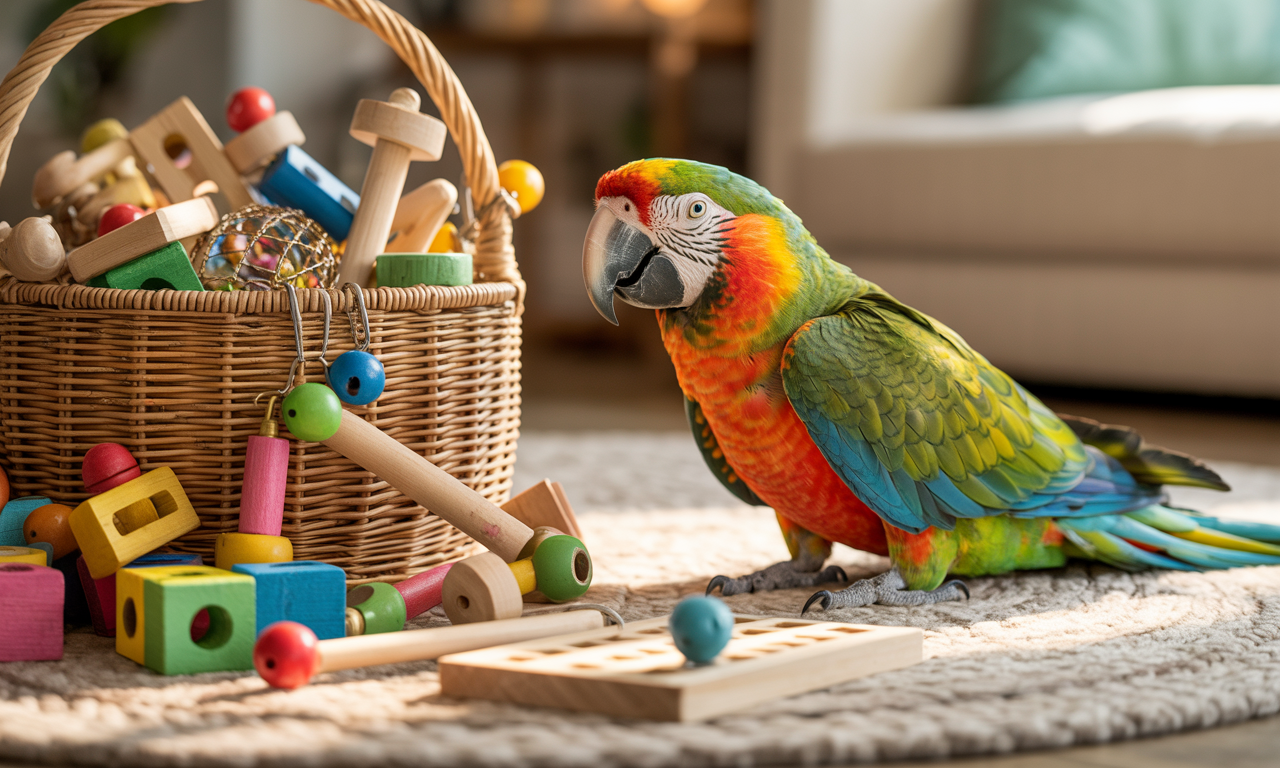
The Problem: Beak Energy Without Direction
Parrots have strong beaks that are meant to chew, explore, and manipulate objects daily. When this energy is not directed properly, birds often chew cage bars, damage perches, or become frustrated and noisy. Over time, this lack of structured activity affects both behavior and emotional health.
This is another area where parrot puzzle toys provide a safe and productive outlet.
The Explanation: How Wooden Block Puzzles Stimulate the Brain
Wooden block puzzles are among the most durable and engaging parrot puzzle toys available. These toys typically include interlocking wooden pieces, sliding panels, knots, or attached bells. To access hidden treats or trigger movement, parrots must push, pull, lift, or rotate parts using their beak and feet.
This combination of physical effort and mental focus keeps parrots deeply engaged. The bell adds auditory feedback, which reinforces curiosity and encourages repeated interaction. Because of this layered challenge, wooden parrot puzzle toys are especially effective for intelligent and energetic birds.
The Solution: Strength, Focus, and Emotional Balance
Adding a wooden block puzzle to your collection of parrot puzzle toys helps channel beak strength into meaningful activity. As parrots work through the challenge, they stay mentally occupied and physically active. This reduces boredom-driven behaviors and builds confidence through problem-solving success.
Parrots that regularly engage with wooden parrot puzzle toys often show improved focus, calmer behavior, and reduced aggression.
Pro Tip: Size and Safety Matter
Always choose wooden puzzles that match your parrot’s size. Blocks should be large enough to prevent swallowing and made from untreated, bird-safe wood. Clean wooden parrot puzzle toys weekly to remove food residue and maintain hygiene.
Puzzle Toy 5 – Perch Feeder Puzzle
The Problem: Feeding Time Ends Too Quickly
For many parrots, feeding takes only a few seconds. Once the bowl is empty, boredom sets in again. This short feeding cycle leaves parrots with excess energy and nothing productive to do, which often leads to screaming, pacing, or attention-seeking behavior.
This is where parrot puzzle toys that combine feeding and thinking become extremely effective.
The Explanation: Why Perch Feeder Puzzles Are So Engaging
A perch feeder puzzle looks like a normal perch but hides food inside sliding compartments or rotating sections. To eat, the bird must balance, grip, and manipulate parts using its beak and feet. This makes perch feeders one of the most functional parrot puzzle toys available.
Because the bird is perched while solving the puzzle, multiple muscles and brain functions work together. This coordinated effort increases focus, slows eating, and provides both physical and mental stimulation. As a result, perch-style parrot puzzle toys keep parrots engaged for longer periods.
The Solution: Turning Feeding Into a Daily Challenge
Replacing regular food bowls with perch feeder parrot puzzle toys transforms meals into enrichment sessions. Instead of passive eating, parrots must think, balance, and problem-solve. This reduces boredom, improves confidence, and supports emotional wellness.
Parrots that regularly use perch feeder parrot puzzle toys often show calmer behavior after meals and remain occupied even when left alone.
Pro Tip: Adjust Height and Difficulty Gradually
Start by placing the perch feeder at a comfortable height and leaving compartments partially open. As your bird gains confidence, increase difficulty by closing sections or moving the perch slightly higher. Rotating perch feeder parrot puzzle toys with other designs keeps feeding time exciting and frustration-free.
Puzzle Toy 6 – Travel Foraging Kit
The Problem: Stress During Travel and Vet Visits
Travel, vet appointments, and changes in environment can be extremely stressful for parrots. New sights, unfamiliar sounds, and restricted movement often lead to panic, loud vocalization, or freezing behavior. Without a distraction, stress levels rise quickly and can linger even after the trip ends.
In these situations, parrot puzzle toys designed for travel can make a significant difference.
The Explanation: How Travel Foraging Kits Reduce Anxiety
A travel foraging kit is a compact collection of small parrot puzzle toys that clip easily into a carrier or travel cage. These may include mini foraging cups, rope puzzles, or soft chew toys with hidden treats. The goal is to keep the bird’s attention focused on problem-solving rather than the unfamiliar surroundings.
When parrots engage with familiar parrot puzzle toys, their brain shifts from fear to curiosity. This mental redirection helps lower stress and creates a sense of routine even in unfamiliar places.
The Solution: Calm, Focused Behavior on the Go
Using a travel foraging kit introduces consistency into stressful situations. Parrots that interact with parrot puzzle toys during travel remain calmer, quieter, and more cooperative. The toys provide comfort, distraction, and a sense of control, which is crucial during vet visits or long journeys.
Over time, parrots associate travel with engagement rather than fear, making future trips easier for both bird and owner.
Pro Tip: Create a Dedicated Travel Set
Always use the same parrot puzzle toys for travel only. Introduce them at home first so your bird becomes familiar with them. Pack this kit as part of a travel routine to reduce anxiety and improve cooperation.
Puzzle Toy 7 – DIY Puzzle Kit (Homemade Challenge)
The Problem: Store-Bought Toys Lose Appeal Over Time
Even the best store-bought toys can become predictable after repeated use. Once a parrot memorizes how a toy works, the mental challenge fades. This often leads birds back to boredom, attention-seeking behavior, or destructive habits.
When novelty disappears, parrot puzzle toys must evolve to stay effective.
The Explanation: Why DIY Puzzle Toys Keep Brains Sharp
DIY puzzle kits allow bird owners to create endlessly customizable parrot puzzle toys using simple, safe household materials. Cardboard tubes, paper cups, untreated wood pieces, and natural fibers can be combined to hide treats in new ways each time.
Because no two DIY puzzles are exactly the same, parrots cannot rely on memory alone. They must think, test, and explore again. This constant variation makes homemade parrot puzzle toys extremely effective for long-term mental stimulation.
The Solution: Unlimited Enrichment at Minimal Cost
DIY challenges give parrots fresh mental workouts without constant spending. Rotating homemade parrot puzzle toys with store-bought options keeps enrichment exciting and unpredictable. Birds stay engaged longer, frustration decreases, and confidence grows with every solved challenge.
Parrots exposed to a mix of commercial and DIY parrot puzzle toys often display better problem-solving skills and reduced stress behaviors.
Pro Tip: Safety Comes First
Only use non-toxic, bird-safe materials such as plain cardboard, untreated wood, paper, and cotton rope. Avoid glue, staples, ink, or plastic. Supervise new DIY parrot puzzle toys during early use to ensure safe interaction.
Frequently Asked Questions (FAQ)
What are parrot puzzle toys?
Parrot puzzle toys are interactive toys designed to challenge a parrot’s intelligence by requiring problem-solving, manipulation, or foraging to access treats or rewards. These toys stimulate the brain, reduce boredom, and support emotional wellness.
How many parrot puzzle toys should a parrot have?
Most parrots benefit from having 3–5 parrot puzzle toys in rotation. Rotating toys every few days keeps the challenges fresh and prevents mental fatigue or overstimulation.
Can parrot puzzle toys really reduce stress?
Yes. Parrot puzzle toys help reduce stress by redirecting a parrot’s focus from anxiety or boredom to purposeful activity. Regular mental engagement calms the mind and decreases destructive behaviors such as screaming or feather-plucking.
Are parrot puzzle toys suitable for all parrot species?
Parrot puzzle toys can be used by most parrot species, but size and difficulty must match the bird. Smaller parrots need simpler puzzles, while larger or highly intelligent species benefit from multi-step challenges.
How do I introduce parrot puzzle toys to a nervous bird?
Start with easy parrot puzzle toys where treats are clearly visible. Allow your bird to explore at its own pace, offer encouragement, and gradually increase difficulty once confidence builds.
Are DIY parrot puzzle toys safe?
DIY parrot puzzle toys are safe when made with non-toxic, bird-safe materials such as untreated wood, cardboard, paper, and cotton rope. Always supervise new homemade toys during initial use.
How often should parrot puzzle toys be changed?
Rotate parrot puzzle toys every 2–4 days. Rotation keeps enrichment exciting and prevents parrots from losing interest due to predictability.
Conclusion: A Happier Mind Creates a Happier Bird
Parrots are not meant to live boring lives. Behind those bright feathers and curious eyes lies a powerful, intelligent mind that needs daily challenges to stay healthy and content. When that need is ignored, boredom quietly turns into stress, frustration, and unwanted behavior.
The right parrot puzzle toys change everything.
By introducing problem-solving, foraging, and interactive play into your bird’s routine, you give your parrot purpose. You replace restlessness with focus, anxiety with curiosity, and destructive habits with confidence. Over time, these small daily challenges build emotional balance, independence, and trust between you and your bird.
Whether you choose store-bought options, DIY creations, or a mix of both, parrot puzzle toys are one of the most powerful tools for improving your bird’s mental and emotional well-being.
✨ Now it’s your turn.
Which parrot puzzle toy will you introduce first to brighten your bird’s day?
Share your experience in the comments—and let’s build happier, smarter parrots together 🦜💚
💡Looking for something different? Check out our latest post here: https://birdsheavencare.com/bird-care-products-usa-uk-canada/