Learn which household toxins for birds are most dangerous and discover bird-safe kitchen and cleaning swaps to protect your pet at home.
- Introduction
- Why Birds Are Extremely Vulnerable to Household Toxins
- Warning Signs of Toxin Exposure in Birds
- Household Toxins for Birds: Kitchen vs Cleaning
- Toxin #1 – Non-Stick Cookware (PTFE / Teflon)
- Toxin #2 – Aerosol Cleaning Sprays
- Toxin #3 – Bleach & Ammonia Cleaners
- Toxin #4 – Scented Candles & Air Fresheners
- Toxin #5 – Oven Cleaners & Degreasers
- Toxin #6 – Essential Oils & Diffusers
- Toxin #7 – Insect Sprays & Pest Control Products
- Bird-Safe Cleaning & Kitchen Swaps Checklist
- Detoxing Your Home for Birds: Step-by-Step
- Frequently Asked Questions (FAQ)
- Conclusion: A Safer Home Is the Best Gift You Can Give Your Bird
Introduction
Household toxins for birds are far more common than most bird owners realize—and many of them are hiding in places we use every single day. From the cookware on your stove to the cleaners under your sink, ordinary household products can release fumes or residues that are harmless to humans but deadly to birds. What makes this especially dangerous is that these toxins often give no warning until it’s too late.
Birds have extremely sensitive respiratory systems. They breathe faster than mammals, absorb airborne chemicals more rapidly, and cannot escape toxic exposure once it fills the air. This means a single cleaning session, overheated non-stick pan, or scented product can quickly turn a “safe” home into a life-threatening environment for your bird.
The good news is that most of these dangers are completely preventable. By learning which household toxins for birds are most harmful—and replacing them with simple bird-safe kitchen and cleaning swaps—you can dramatically reduce risk without sacrificing cleanliness or convenience.
By the end of this post, you’ll know exactly which household toxins to remove, why they’re dangerous for birds, and the safest bird-friendly alternatives you can start using today to protect your feathered companion.
Why Birds Are Extremely Vulnerable to Household Toxins
The Problem: Birds Absorb Toxins Faster Than Humans
Many people assume that if a product is safe for humans, it must also be safe for birds. Unfortunately, this assumption is dangerous. Birds are biologically very different from mammals, and their bodies react to chemicals far more quickly and severely. Even brief exposure to certain fumes can overwhelm a bird’s system.
This is why household toxins for birds pose such a serious and often underestimated threat inside homes.
The Explanation: The Avian Respiratory System
Birds have one of the most efficient respiratory systems in the animal world. Instead of lungs alone, they rely on a complex system of air sacs that move air continuously through the body. While this system allows birds to absorb oxygen efficiently, it also means they absorb airborne toxins at a much faster rate.
When toxic fumes are released—from overheated cookware, cleaning sprays, or scented products—they circulate rapidly through a bird’s air sacs. Even low-level exposure to household toxins for birds can cause respiratory distress, neurological damage, or sudden collapse.
The Solution: Prevention Through Environmental Awareness
Because birds cannot filter or detoxify airborne chemicals the way humans can, prevention is the only effective defense. Removing or replacing common sources of toxins drastically reduces risk. Awareness of household toxins for birds allows owners to make safer choices long before an emergency occurs.
A bird-safe home is built not through treatment, but through thoughtful elimination of hidden dangers.
Pro Tip: Trust Your Bird’s Sensitivity
If a smell feels strong, irritating, or chemical-heavy to you, it is already dangerous for a bird. As a rule of thumb, anything that irritates your nose, eyes, or throat should never be used near birds.
Warning Signs of Toxin Exposure in Birds
The Problem: Toxic Exposure Often Goes Unnoticed
One of the most frightening aspects of household poisoning is how quickly it can affect birds. Unlike dogs or cats, birds often show very subtle symptoms at first—or none at all. By the time obvious signs appear, exposure to household toxins for birds may already be severe.
Because birds instinctively hide weakness, owners may miss early warning signals unless they know exactly what to watch for.
The Explanation: How Toxin Exposure Manifests
When birds inhale or come into contact with toxic substances, their bodies react rapidly. The respiratory and nervous systems are usually affected first, followed by the digestive system. Exposure can occur through fumes, dust, residue on surfaces, or contaminated food and water.
Common warning signs of exposure to household toxins for birds include:
- Sudden lethargy or weakness
- Open-mouth breathing or rapid panting
- Loss of balance or falling from perch
- Tremors, seizures, or twitching
- Vomiting or abnormal droppings
- Disorientation or unresponsiveness
- Sudden collapse or, in extreme cases, death
These symptoms should always be treated as medical emergencies.
The Solution: Act Fast and Remove the Source
If you suspect toxin exposure, immediately move your bird to fresh air and remove the suspected source. Ventilate the area and contact an avian veterinarian as soon as possible. Quick action can make the difference between recovery and fatality when dealing with household toxins for birds.
Pro Tip: When in Doubt, Treat It as an Emergency
Never “wait and see” if symptoms improve. Birds deteriorate rapidly once affected. If behavior changes suddenly and you recently used cleaning products, cookware, or scented items, assume toxic exposure and seek help immediately.
Household Toxins for Birds: Kitchen vs Cleaning
The Problem: Danger Hides in Everyday Routines
Most bird owners associate toxins with obvious chemicals, but many of the most dangerous household toxins for birds are part of daily routines. Cooking meals, wiping counters, or freshening the air can quietly release fumes or residues that birds cannot tolerate. Because these activities feel normal and harmless, the risks are often overlooked.
Understanding where these toxins come from is the first step toward prevention.
The Explanation: Two High-Risk Zones in Every Home
Household toxins that affect birds usually fall into two major categories: kitchen-related toxins and cleaning or home-care toxins. Both areas can expose birds through airborne fumes, surface contact, or contaminated food and water.
Kitchen-Based Toxins
The kitchen is one of the most dangerous spaces for birds. High heat, fumes, and food preparation increase the risk of exposure. Common kitchen-related household toxins for birds include:
- Non-stick cookware fumes
- Smoke from overheated oil or burnt food
- Gas stove emissions
- Food residue containing toxic ingredients
Cleaning & Home-Care Toxins
Cleaning products are designed to kill germs, but many contain chemicals that are extremely harmful to birds. These household toxins for birds often spread through the air and linger long after cleaning is finished:
- Aerosol sprays and disinfectants
- Bleach and ammonia-based cleaners
- Scented candles and air fresheners
- Floor cleaners and degreasers
The Solution: Identify and Separate Risk Areas
Once you recognize which rooms pose the highest risk, you can take targeted action. Keeping birds away from kitchens during cooking and switching to bird-safe cleaning products dramatically reduces exposure. Awareness of household toxins for birds allows you to redesign routines instead of reacting to emergencies.
Pro Tip: Airborne Toxins Travel Fast
Even if your bird is not in the kitchen or bathroom, fumes can travel quickly through open spaces and ventilation systems. Always assume that airborne toxins can reach your bird unless proven otherwise.
Toxin #1 – Non-Stick Cookware (PTFE / Teflon)
The Problem: Invisible Fumes That Can Kill Birds
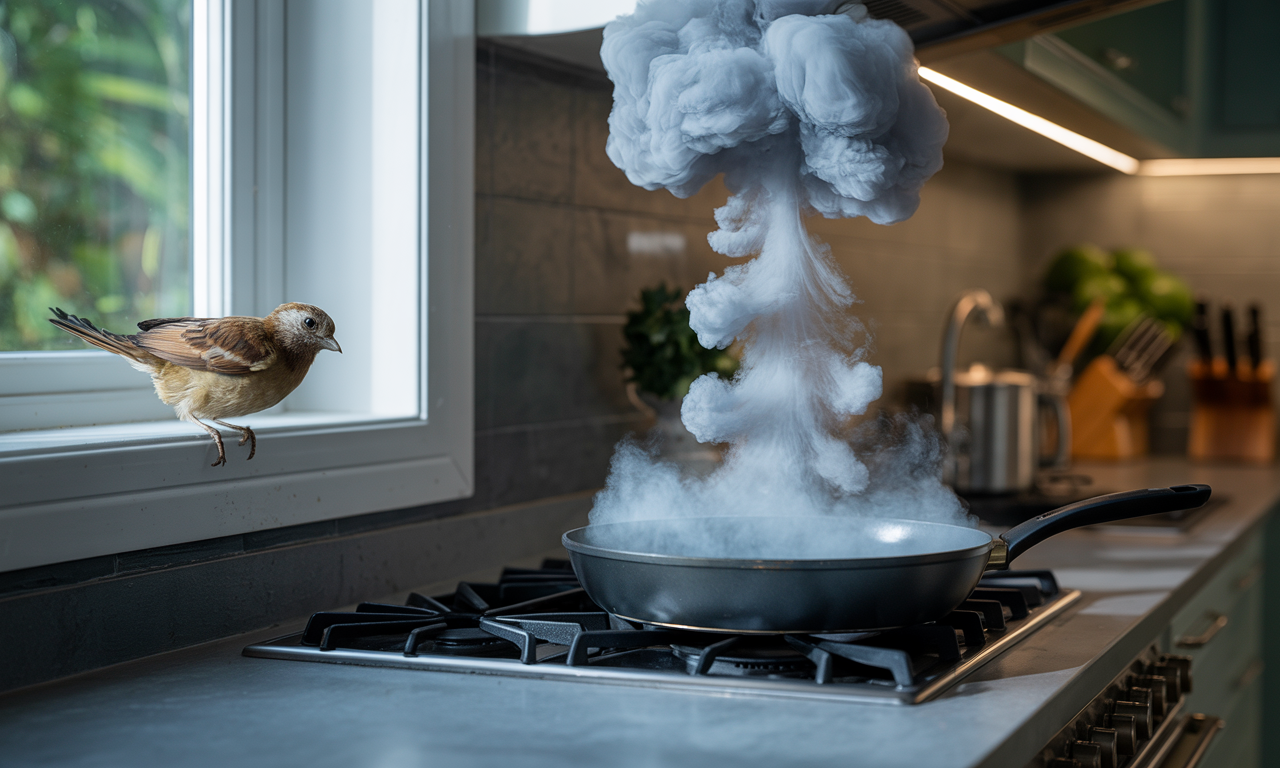
Non-stick cookware is one of the most dangerous household toxins for birds, yet it exists in countless kitchens. When non-stick pans are overheated—even briefly—they release invisible fumes that are harmless to humans but can be fatal to birds within minutes. Many bird deaths linked to cookware occur suddenly, without warning signs.
The most alarming part is that this exposure often happens during routine cooking.
The Explanation: Why PTFE Is Deadly to Birds
Most non-stick cookware is coated with PTFE (polytetrafluoroethylene), commonly known as Teflon. When heated above safe temperatures, PTFE breaks down and releases toxic gases. Birds inhale these fumes rapidly due to their highly efficient respiratory systems, causing acute respiratory failure.
Even a single exposure to these household toxins for birds can result in collapse or sudden death. Opening windows after the fact is often too late.
The Solution: Eliminate Non-Stick Cookware from Bird Homes
The only safe solution is complete removal of PTFE-coated cookware from homes with birds. This includes frying pans, baking trays, waffle irons, air fryers, and slow cookers that may contain non-stick coatings. Avoid using such items anywhere in the house—even in separate rooms.
Removing this source of household toxins for birds dramatically reduces one of the most common causes of accidental poisoning.
Bird-Safe Swap: Safer Cookware Options
Replace non-stick cookware with bird-safe alternatives such as:
- Stainless steel cookware
- Cast iron pans
- Glass or ceramic baking dishes
These materials do not release toxic fumes and are safe for use in bird-friendly homes.
Pro Tip: Watch for Hidden Non-Stick Surfaces
Many appliances contain non-stick coatings internally, including rice cookers, air fryers, and electric grills. Always check product specifications carefully before bringing new cookware into a home with birds.
Toxin #2 – Aerosol Cleaning Sprays
The Problem: Airborne Chemicals Spread Instantly
Aerosol cleaning sprays are commonly used for quick cleaning, but they are extremely dangerous around birds. When sprayed, these products release fine chemical particles into the air that can remain suspended for long periods. Birds inhale these particles almost immediately, even if they are in another part of the room.
Because exposure happens silently, aerosol sprays are a major source of household toxins for birds.
The Explanation: Why Aerosols Are So Harmful to Birds
Unlike liquid cleaners that stay on surfaces, aerosol sprays create microscopic droplets that travel easily through the air. These droplets enter a bird’s respiratory system quickly and deeply. Many sprays contain disinfectants, solvents, and fragrances that irritate air sacs and lungs.
Even brief exposure to these household toxins for birds can cause breathing distress, weakness, or sudden collapse. Ventilating the room after spraying often does not remove the danger fast enough.
The Solution: Eliminate Aerosol Products Completely
The safest approach is to stop using aerosol sprays entirely in homes with birds. This includes disinfectant sprays, glass cleaners, furniture sprays, and spray polishes. Removing this category of household toxins for birds greatly reduces airborne risk inside the home.
Cleaning should always be done using products that do not disperse chemicals into the air.
Bird-Safe Swap: Non-Aerosol Cleaning Methods
Replace aerosol sprays with safer alternatives such as:
- Liquid cleaners applied with cloths
- Diluted vinegar and water solutions
- Baking soda for scrubbing
- Bird-safe, fragrance-free cleaners
These options clean effectively without releasing toxic fumes.
Pro Tip: Check “Trigger Sprays” Too
Some trigger-spray bottles still produce fine mist. Always spray cleaners onto a cloth first—never directly into the air or onto surfaces near birds.
Toxin #3 – Bleach & Ammonia Cleaners
The Problem: Harsh Fumes That Damage Bird Lungs
Bleach and ammonia are powerful cleaning agents found in many households. While effective for disinfecting, they release strong fumes that are extremely dangerous to birds. Even small amounts used during routine cleaning can fill the air with toxic gases that birds cannot tolerate.
Because of their strength, bleach and ammonia are among the most harmful household toxins for birds, especially in enclosed spaces.
The Explanation: Why These Chemicals Are So Dangerous
Bleach releases chlorine-based fumes, while ammonia produces sharp, irritating vapors. When inhaled, these chemicals cause immediate irritation to a bird’s delicate respiratory system. Exposure can lead to breathing distress, chemical burns to air sacs, and long-term lung damage.
The danger increases significantly if bleach and ammonia are mixed—intentionally or accidentally—as this creates chlorine gas, which can be fatal within minutes. These reactions make them especially dangerous household toxins for birds.
The Solution: Avoid Use in Bird Homes
The safest option is to avoid bleach and ammonia entirely in homes with birds. If their use is unavoidable, birds must be removed from the home during cleaning, and the space must be thoroughly ventilated for several hours before birds return. Even then, risk remains.
Eliminating these household toxins for birds is a major step toward a safer indoor environment.
Bird-Safe Swap: Gentler Cleaning Alternatives
Safer alternatives include:
- Diluted hydrogen peroxide (used carefully and sparingly)
- Vinegar and water solutions
- Baking soda for scrubbing
- Bird-safe commercial cleaners labeled fragrance-free and non-toxic
These options reduce chemical exposure while maintaining cleanliness.
Pro Tip: Never Mix Cleaning Products
Never combine bleach, ammonia, or other cleaners—especially around birds. Mixing products increases toxicity and creates gases that are far more dangerous than individual chemicals alone.
Toxin #4 – Scented Candles & Air Fresheners
The Problem: Pleasant Scents That Poison the Air
Scented candles and air fresheners are often used to make homes smell clean and relaxing. Unfortunately, these products release chemicals that are highly toxic to birds. What smells pleasant to humans can quietly pollute the air with substances birds cannot safely inhale.
Because they are used regularly and seem harmless, scented products are a common source of household toxins for birds.
The Explanation: How Fragrances Harm Birds
Most scented candles and air fresheners release volatile organic compounds (VOCs), synthetic fragrances, and sometimes soot particles. When burned or sprayed, these chemicals remain suspended in the air and are absorbed rapidly through a bird’s respiratory system.
Chronic exposure to these household toxins for birds can cause respiratory irritation, hormonal disruption, behavioral changes, and increased vulnerability to illness. In poorly ventilated spaces, even short-term use can be dangerous.
The Solution: Remove All Scented Products
The safest approach is to eliminate scented candles, plug-ins, sprays, incense, and wax melts from bird homes. Avoid “natural” or “essential oil–based” products as well, since they can still release harmful airborne compounds.
Removing these household toxins for birds helps ensure clean, breathable air for your bird at all times.
Bird-Safe Swap: Natural Odor Control
Instead of scented products, use bird-safe alternatives such as:
- Regular ventilation with fresh air
- Baking soda to absorb odors
- Activated charcoal odor absorbers
- Keeping cages and litter areas clean
These methods keep your home fresh without releasing toxic fumes.
Pro Tip: Smoke Is Never Safe
Even unscented candles produce smoke and soot. Any form of smoke—no matter how mild—is unsafe for birds and should be avoided entirely.
Toxin #5 – Oven Cleaners & Degreasers
The Problem: Extremely Concentrated Chemical Fumes
Oven cleaners and heavy-duty degreasers are designed to dissolve stubborn grease and baked-on residue. To do this, they contain some of the strongest chemicals used in household cleaning. When applied, these products release intense fumes that can linger in the air long after cleaning is finished.
Because of their strength, oven cleaners and degreasers rank among the most dangerous household toxins for birds.
The Explanation: Why These Products Are Especially Toxic
Most oven cleaners contain caustic chemicals such as sodium hydroxide and powerful solvents. These substances release vapors that can burn delicate respiratory tissues when inhaled. Birds, with their highly sensitive air sacs, absorb these fumes rapidly, often resulting in immediate breathing distress or collapse.
Even short exposure to these household toxins for birds can cause severe respiratory injury. Cleaning ovens while birds are in the home—even in another room—poses serious risk due to how quickly fumes spread.
The Solution: Never Use These Products Around Birds
The safest solution is to completely avoid oven cleaners and degreasers in homes with birds. If their use is unavoidable, birds must be removed from the home entirely, and the area must be ventilated for an extended period—often 24 hours or more—before birds return.
Eliminating these household toxins for birds greatly reduces the risk of accidental poisoning.
Bird-Safe Swap: Gentle, Non-Toxic Cleaning Methods
Replace harsh cleaners with safer alternatives such as:
- Baking soda paste for scrubbing ovens
- Vinegar and water for grease removal
- Steam cleaning methods
- Bird-safe, non-toxic commercial cleaners
These methods may require more effort but protect your bird’s health.
Pro Tip: Clean When Birds Are Away
Plan deep cleaning tasks when birds can be safely relocated to another home or veterinary boarding facility. Never assume that ventilation alone makes these products safe.
Toxin #6 – Essential Oils & Diffusers
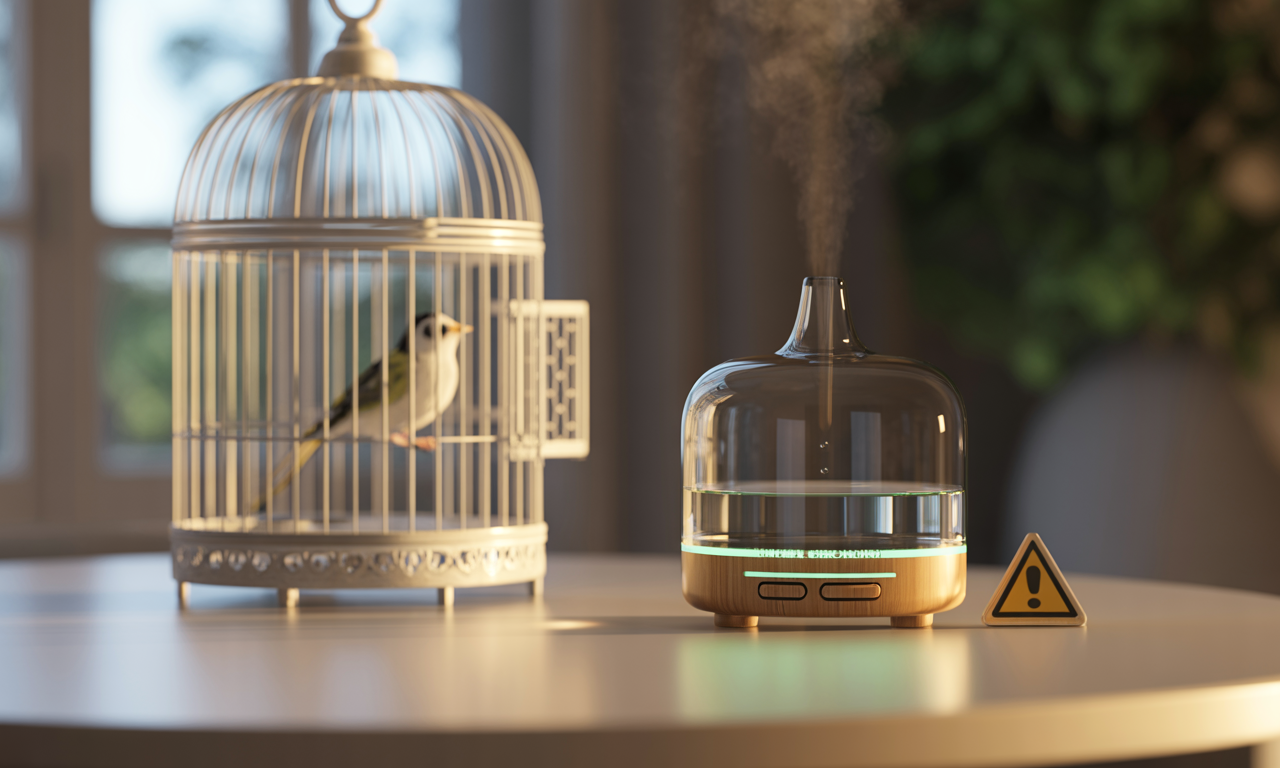
The Problem: “Natural” Products That Are Still Dangerous
Essential oils are often marketed as natural, calming, and healthy. However, what is safe—or even beneficial—for humans can be extremely dangerous for birds. Diffusers, oil burners, sprays, and even oil-soaked items release concentrated airborne particles that birds cannot safely process.
Because they are widely used and misunderstood, essential oils are a major source of household toxins for birds.
The Explanation: Why Essential Oils Harm Birds
Essential oils are highly concentrated plant compounds. When diffused, they break into microscopic particles that remain suspended in the air. Birds inhale these particles rapidly through their sensitive respiratory systems, where the oils can irritate air sacs, overwhelm the liver, and interfere with normal breathing.
Even oils considered “safe” for pets can act as household toxins for birds due to the bird’s unique metabolism and inability to detoxify these compounds efficiently.
The Solution: Avoid Oils and Diffusers Entirely
The safest approach is to avoid using essential oils, diffusers, incense, and oil-based sprays anywhere in homes with birds. This includes passive diffusers, reed diffusers, and oil-infused cleaning products.
Removing these household toxins for birds ensures clean air and reduces the risk of both immediate and long-term respiratory damage.
Bird-Safe Swap: Clean Air Without Chemicals
Instead of oils or fragrances, rely on:
- Fresh air and proper ventilation
- Regular cleaning with bird-safe products
- Activated charcoal or baking soda for odor absorption
- Maintaining good cage hygiene
These methods keep air fresh without chemical exposure.
Pro Tip: Oils Linger Longer Than You Think
Essential oil particles can settle on surfaces and remain airborne for hours. Even diffusing oils in another room can expose birds through shared air space, so complete avoidance is best.
Toxin #7 – Insect Sprays & Pest Control Products
The Problem: Chemicals Designed to Kill Insects Can Kill Birds Too
Insect sprays, bug bombs, and pest control products are specifically formulated to disrupt nervous systems. While effective against pests, these chemicals are extremely dangerous to birds—even in small amounts. Exposure can occur through direct contact, contaminated surfaces, or airborne particles.
Because of their potency, pest control products are among the most serious household toxins for birds found in homes.
The Explanation: Why Pest Control Chemicals Are So Dangerous
Many insecticides contain neurotoxic compounds that interfere with nerve signaling. Birds absorb these chemicals rapidly through inhalation or contact with feet, feathers, or beaks. Once absorbed, toxins can cause neurological symptoms such as tremors, seizures, paralysis, or sudden collapse.
Even products labeled “pet-safe” can still act as household toxins for birds, as birds metabolize chemicals very differently from mammals.
The Solution: Avoid Chemical Pest Control in Bird Homes
The safest solution is to avoid chemical insect sprays, foggers, fumigators, and pest strips entirely in homes with birds. If professional pest control is necessary, birds must be removed from the home, and the environment must be thoroughly ventilated and cleaned before their return.
Eliminating these household toxins for birds significantly reduces the risk of accidental poisoning.
Bird-Safe Swap: Non-Toxic Pest Prevention
Safer alternatives include:
- Sealing cracks and entry points
- Using physical traps instead of sprays
- Maintaining clean food storage
- Natural deterrents placed far from bird areas
These methods control pests without exposing birds to toxic chemicals.
Pro Tip: Residue Is Still Dangerous
Pesticide residue can remain on floors, walls, and surfaces long after application. Birds walking on treated surfaces can absorb toxins through their feet, so complete avoidance is always the safest option.
Bird-Safe Cleaning & Kitchen Swaps Checklist
The Problem: Knowing the Toxins Isn’t Enough
Learning about household toxins for birds is only the first step. Many bird owners still feel unsure about what they should actually use instead. Without clear alternatives, it’s easy to fall back on familiar products that may still pose a risk.
This checklist removes confusion by clearly separating what to avoid from what is safe.
The Explanation: Safer Swaps Protect Without Sacrificing Cleanliness
A bird-safe home does not have to be dirty or inconvenient. Most toxic products have simple, effective alternatives that clean just as well—without releasing harmful fumes or residues. Replacing household toxins for birds with safer options dramatically reduces daily exposure.
✅ Kitchen: What to Avoid vs What to Use
Avoid
- Non-stick cookware (PTFE/Teflon)
- Air fryers with unknown coatings
- Overheated oils and smoky cooking
- Harsh oven cleaners
Bird-Safe Swaps
- Stainless steel or cast iron cookware
- Glass or ceramic baking dishes
- Low-heat cooking methods
- Baking soda and vinegar for cleaning
✅ Cleaning Products: What to Avoid vs What to Use
Avoid
- Aerosol sprays and disinfectants
- Bleach and ammonia cleaners
- Scented floor cleaners
- “Pet-safe” cleaners with fragrance
Bird-Safe Swaps
- Vinegar and water solutions
- Baking soda for scrubbing
- Diluted hydrogen peroxide (used carefully)
- Certified bird-safe, fragrance-free cleaners
✅ Air & Home Environment: What to Avoid vs What to Use
Avoid
- Scented candles and wax melts
- Plug-in air fresheners
- Essential oil diffusers
- Smoke of any kind
Bird-Safe Swaps
- Fresh air and ventilation
- Activated charcoal odor absorbers
- Regular cage cleaning
- Natural airflow without chemicals
The Solution: Use the Checklist as a Routine Guide
Keep this checklist handy when shopping, cleaning, or replacing household items. By consistently choosing bird-safe swaps, you reduce exposure to household toxins for birds every single day—not just during deep cleaning.
Pro Tip: One Swap at a Time
You don’t need to change everything overnight. Start with the most dangerous items—non-stick cookware and aerosol cleaners—then gradually replace the rest. Every small change makes your home safer for your bird.
Detoxing Your Home for Birds: Step-by-Step
The Problem: Toxins Build Up Over Time
Many homes don’t become dangerous overnight. Instead, risk builds gradually as toxic products accumulate and routines repeat. Even after learning about household toxins for birds, owners may feel overwhelmed about where to start or worry about disrupting daily life.
A step-by-step detox plan makes the process manageable and effective.
The Explanation: Detoxing Is About Elimination, Not Perfection
Detoxing your home for birds does not require extreme measures or expensive replacements. The goal is to systematically remove the most dangerous items first, then replace them with safer alternatives. By focusing on high-risk areas, you reduce exposure to household toxins for birds quickly and safely.
The Solution: A Simple Room-by-Room Detox Plan
Step 1: Start With the Kitchen (Highest Risk)
- Remove all non-stick cookware and appliances with unknown coatings
- Stop using oven cleaners and degreasers
- Improve ventilation during cooking
- Keep birds out of the kitchen entirely while cooking
Step 2: Clean Out Cleaning Supplies
- Discard aerosol sprays, bleach, ammonia, and scented cleaners
- Replace them with bird-safe alternatives
- Store all cleaning products securely, away from cages
Step 3: Eliminate Airborne Threats
- Remove scented candles, incense, wax melts, and diffusers
- Avoid smoke from cooking, incense, or burning materials
- Use natural ventilation and odor absorbers instead
Step 4: Review Pest Control Methods
- Stop using insect sprays, foggers, and pest strips
- Seal entry points and use non-toxic traps
- Schedule professional pest control only when birds are relocated
Step 5: Audit New Purchases
- Research all new appliances, cleaners, and home products
- Avoid vague labels like “pet-safe” without bird-specific confirmation
- Assume caution when information is unclear
The Result: A Safer, Calmer Living Space
Once detoxed, your home becomes significantly safer for birds. Owners often notice calmer behavior, improved breathing, and reduced stress once exposure to household toxins for birds is minimized.
Pro Tip: Re-Audit Every Few Months
Products change, habits evolve, and new items enter the home. Revisit your detox checklist seasonally to ensure new risks haven’t been introduced unintentionally.
Frequently Asked Questions (FAQ)
What are the most dangerous household toxins for birds?
The most dangerous household toxins for birds include non-stick cookware fumes (PTFE/Teflon), aerosol sprays, bleach and ammonia cleaners, scented candles, essential oil diffusers, oven cleaners, and insect sprays. These products release fumes or residues that birds cannot safely tolerate.
Are non-stick pans really deadly for birds?
Yes. Overheated non-stick pans can release invisible fumes that cause acute respiratory failure in birds within minutes. Non-stick cookware is one of the most well-documented household toxins for birds and should never be used in bird homes.
Are “pet-safe” cleaning products safe for birds?
Not always. Many products labeled “pet-safe” are tested only for dogs and cats. Birds have far more sensitive respiratory systems, so some of these cleaners may still act as household toxins for birds. Always look for bird-specific safety confirmation.
Can birds recover from toxin exposure?
Recovery depends on the toxin, exposure level, and how quickly treatment begins. Some birds recover with immediate veterinary care, while severe exposure to household toxins for birds can be fatal. Prevention is always safer than treatment.
Are natural cleaners always safe for birds?
No. “Natural” does not automatically mean bird-safe. Essential oils, strong plant extracts, and scented natural products can still be harmful. Always choose fragrance-free, non-aerosol, bird-safe cleaning options.
How can I bird-proof my kitchen?
To bird-proof your kitchen, remove non-stick cookware, avoid harsh cleaners, improve ventilation, and keep birds out of the kitchen during cooking. Kitchens are one of the highest-risk areas for household toxins for birds.
What should I do if I suspect toxin exposure?
Immediately move your bird to fresh air, remove the suspected toxin source, ventilate the area, and contact an avian veterinarian right away. Do not wait for symptoms to worsen.
Conclusion: A Safer Home Is the Best Gift You Can Give Your Bird
Birds trust us completely with their environment. They cannot escape toxic air, question cleaning products, or warn us when something smells dangerous. What feels ordinary to us can quietly become life-threatening for them.
By identifying and eliminating household toxins for birds, you take one of the most powerful steps toward protecting your bird’s health. Swapping cookware, choosing safer cleaners, and removing scented products may seem small—but together, they create a home where your bird can breathe easily, rest calmly, and live safely.
Detoxing your home isn’t about fear—it’s about awareness and care. Every unsafe product removed is a risk eliminated. Every bird-safe swap is a step toward prevention rather than emergency treatment.
🌿 Now it’s your turn.
Which household toxin will you remove first to make your home safer for your bird?
Share your thoughts or experiences in the comments—your action could help protect another bird’s life 🐦💚
💡Looking for something different? Check out our latest post here: https://birdsheavencare.com/climate-control-for-birds/